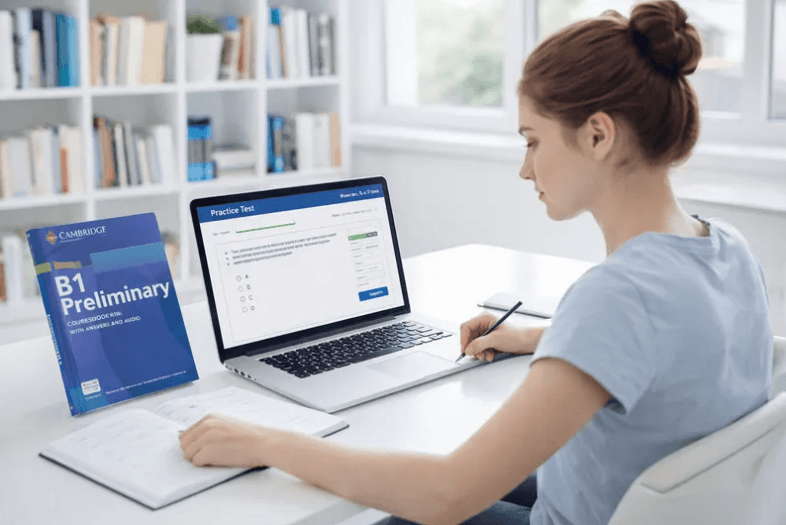
Nobody performs at their best the first time they see an exam format, no matter how well they know the material underneath it. That single fact explains why practice runs exist, and why skipping them tends to cost far more than the twenty minutes they take. A short list of reasons makes the case better than a vague recommendation ever could.
1. You Learn the Question Types
Reading comprehension passages, fill-in-the-blank grammar items, and vocabulary-in-context questions each demand a different mental gear. Meeting them for the first time on the real attempt wastes valuable seconds figuring out what is even being asked. A single trial run removes most of that early confusion before it can cost you points.
2. You Train Your Pacing Instead of Guessing
Running a mock session teaches you how long each section actually takes, not how long you assume it takes. That distinction matters once a countdown clock is involved and rereading a passage twice is no longer an option. Learners who skip this step often run out of time on the final section, even when they knew every answer.
3. You Walk In Calmer
Nerves rarely come from the material itself. They come from not knowing what to expect once the clock starts running. In one review covering dozens of studies, 72 percent of students reported feeling less anxious after taking regular practice tests beforehand. Familiarity, more than raw ability, tends to settle a racing mind before test day arrives.
4. You Get an Honest Preview
Taking an English test B1 simulation shows you something a textbook chapter cannot. It delivers a live, timed snapshot of how your grammar, vocabulary, and comprehension actually perform together under real pressure. That combined picture is far more useful than isolated exercises completed one skill at a time. Real exams never test one skill in isolation either, and knowing that in advance changes how you prepare.
See also: Practical Ways To Improve The Chances Of Winning A Wrongful Death Suit
5. You Spot Weak Areas
You might not notice you keep rushing the final reading passage, or second-guessing vocabulary answers you already got right, until a timer shows it happening more than once. Testizer, which is an online test platform, breaks each attempt down by section, so a habit like that shows up as a number instead of a hunch. Knowing exactly what to fix beats guessing at it every time.
6. You Build Genuine Confidence, Not Just False Comfort
Confidence built on repetition tends to hold up better than confidence built on hope. After several timed runs, the real exam stops feeling like an unfamiliar event and starts feeling like something you have already rehearsed more than once. That shift alone often improves performance independent of any additional studying.
Practicing With Purpose
A single mock attempt rarely tells the full story, but a handful of them, spaced out over a few weeks, changes how test day actually feels. Treat each session as data rather than a verdict, and the improvements tend to compound quickly. Review your weakest section after every attempt instead of only checking the final score. By the time the real exam arrives, very little about it should feel unfamiliar.