Introduction:
In today’s fast-paced manufacturing environment, packaging efficiency is no longer a luxury it’s a competitive necessity. Whether you’re in the food, pharmaceutical, hardware, or consumer goods industry, the machine you choose to package your products can directly impact your output speed, product quality, cost per unit, and brand reputation.
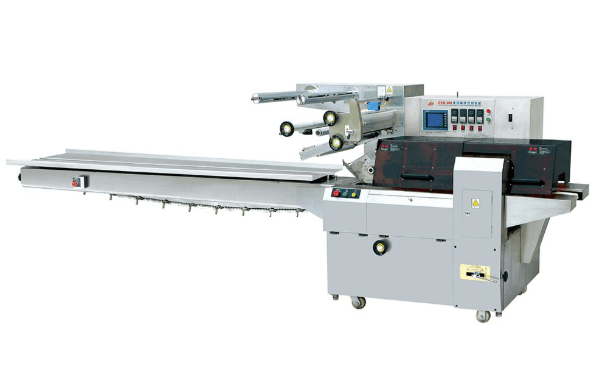
A horizontal form fill seal machine commonly known as an HFFS machine is one of the most versatile and widely adopted solutions in modern packaging automation. It forms a pouch from a flat roll of flexible film, fills it with your product, and seals it all in one continuous, automated process.
But not all HFFS packaging machines are created equal. With dozens of manufacturers offering varying configurations, specs, and features, knowing what to look for before you invest is critical.
This guide walks you through the most important features to evaluate when selecting a horizontal form fill seal packaging machine for your production line.
What Is a Horizontal Form Fill Seal Machine?
A horizontal form fill and seal machine operates on a horizontal plane, meaning the product is inserted from the side rather than dropped in from above (as with vertical FFS machines). This makes it ideally suited for:
- Products that cannot be dropped without damage (biscuits, bars, medical devices, hardware parts)
- Irregularly shaped items
- Pre-formed trays or solid products requiring a “flow wrap” style package
- High-speed production of pillow pouches, fin-seal packs, and three-side sealed bags
The HFFS packaging machine integrates film unwinding, forming, filling, sealing, and cutting into a single automated workflow reducing labor costs, minimizing human error, and dramatically increasing throughput.
10 Important Features to Look for in a Horizontal Form Fill Seal Machine
1. Build Quality and Frame Construction
The foundation of any reliable industrial packaging machine is its structural integrity. Look for:
- Stainless steel or food-grade anodized aluminum frames — essential for food, pharma, and hygiene-sensitive applications
- Heavy-duty welded construction that resists vibration at high speeds
- IP65 or higher-rated enclosures for electrical components, protecting against dust and moisture
- Easy-access panels for maintenance without full disassembly
A machine built with inferior materials may perform adequately at first but will degrade rapidly under continuous industrial use. Always ask your horizontal form fill seal machine manufacturer about the materials used in the frame, sealing jaws, and conveyor system.
2. Film Compatibility and Flexible Packaging Support
One of the most critical capabilities of a flexible packaging machine is its ability to handle a wide variety of packaging films. A high-quality HFFS machine should support:
- Polyethylene (PE)
- Polypropylene (PP) — both OPP and CPP
- Laminated films (PET/PE, BOPP/PE, Nylon/PE)
- Biodegradable and compostable films for eco-conscious brands
- Metallized films for barrier-sensitive products
Look for automatic film splicing, tension control systems, and film tracking sensors that ensure consistent, waste-free film feeding across different material types and thicknesses.
The more film types your horizontal packaging machine supports, the more flexibility you retain as your product range or packaging requirements evolve.
See also: Elevating Home Dining with Luxury Seafood Ingredients
3. Sealing System Quality
The seal is the most critical functional element of any form fill seal packaging machine. A weak or inconsistent seal leads to product spoilage, customer returns, and regulatory problems.
Evaluate the following:
- Sealing jaw material: Hardened steel jaws with PTFE/Teflon coating deliver consistent, high-integrity seals
- Seal type support: Check whether the machine handles fin seals, lap seals, and gusset seals
- Temperature control precision: Digital PID temperature controllers ensure uniform heat across the entire seal width
- Sealing pressure adjustment: Critical for different film thicknesses and materials
- Dwell time control: The duration jaws contact the film affects seal strength — this must be adjustable
For food and pharmaceutical applications, sealing performance should meet FDA, CE, or BRC packaging standards depending on your target market.
4. Speed and Throughput Capacity
Production speed is one of the first specs buyers look at but it must be evaluated in context. Key questions to ask:
- What is the maximum bag output per minute under ideal conditions?
- What is the realistic sustained speed with your specific product and film?
- How does speed change when switching between bag sizes?
A modern automatic pouch packing machine should offer:
- 30 to 200+ bags per minute depending on configuration
- Servo-driven motion control for precise, high-speed operation with minimal downtime
- Variable speed drives that let operators adjust throughput without mechanical changes
Beware of manufacturers who quote peak speeds that are only achievable under controlled lab conditions. Request a factory acceptance test (FAT) with your actual product if possible.
5. Control System and HMI Interface
The intelligence of a packaging automation system lives in its control system. Modern HFFS machines should feature:
- PLC-based control (Siemens, Allen-Bradley, or Mitsubishi are industry-standard brands)
- Touchscreen HMI (Human-Machine Interface) with intuitive graphical controls
- Recipe storage: The ability to save and recall product-specific settings (seal temperature, bag length, speed, fill weight) with a single button press
- Fault diagnostics: Real-time alerts with plain-language error descriptions and suggested corrective actions
- Remote monitoring capability: Ethernet or Wi-Fi connectivity for Industry 4.0 integration, remote diagnostics, and OEE tracking
- Multi-language support for international production environments
A poorly designed control system wastes hours per week in operator training, changeover time, and troubleshooting.
6. Filling System Integration
A horizontal form fill seal packaging machine is only as effective as its filling system. Depending on your product type, look for compatibility with:
| Product Type | Recommended Filling System |
| Granules, seeds, snacks | Volumetric cup filler or multi-head weigher |
| Liquids and pastes | Piston filler or peristaltic pump |
| Powders | Auger filler with anti-drip nozzle |
| Solid/counted items | Vibratory or conveyor-based counting system |
| Pre-formed products | Robotic pick-and-place or pusher arm |
The filling system should integrate directly with the HFFS machine’s PLC so that fill quantity, speed, and timing are synchronized with the sealing and cutting cycles eliminating product spillage and underfill/overfill.
7. Bag Style and Size Versatility
The best pouch packaging machine for your operation is one that grows with your business. Evaluate:
- Bag styles supported: Pillow pouch, three-side seal, four-side seal, gusseted bag, stand-up pouch (with bottom gusset attachment)
- Size range: Minimum and maximum bag width and length
- Changeover time: How quickly (and easily) operators can switch between bag sizes and product types
- Toolless or quick-release changeover parts significantly reduce downtime between production runs
A form fill seal machine with narrow size versatility may be cheaper upfront but will limit you as your product portfolio expands.
8. Hygienic Design and Washdown Capability
For food, beverage, and pharmaceutical manufacturers, hygienic design is non-negotiable in any automated packaging machine:
- Open-frame or cantilevered design that eliminates hidden cavities where bacteria can accumulate
- Sloped surfaces to prevent water and product pooling
- Sealed bearings and motors rated for washdown environments
- Quick-release product contact parts that can be removed, sanitized, and reinstalled without tools
- USDA/FDA-accepted materials on all product-contact surfaces
Even for non-food applications, easy cleaning reduces contamination risk and extends machine life.
9. Waste Reduction and Efficiency Features
In high-volume operations, even small inefficiencies compound into significant losses. A well-engineered flexible packaging machine should include:
- Film waste minimization: Precise registration and tension control reduce film waste between bags
- Auto film tracking: Keeps film centered without constant operator adjustment
- Reject system integration: Automatic detection and rejection of underweight, unsealed, or misfilled packs
- Scrap film rewinder: Collects and winds waste film trim for disposal or recycling
- Energy-efficient servo motors instead of older pneumatic or cam-driven systems
Ask your horizontal form fill seal machine manufacturer to provide data on average film waste percentage under standard production conditions.
10. After-Sales Support and Spare Parts Availability
A machine is only as reliable as the support behind it. Before purchasing any industrial packaging machine, evaluate:
- Warranty terms: Minimum 12 months on parts and labor; 24 months is the industry benchmark for reputable manufacturers
- Spare parts availability: Are critical wear parts (sealing jaws, belts, sensors, blades) stocked locally or must they be imported with long lead times?
- Technical support: Is 24/7 remote support available? Is on-site engineering response guaranteed within a defined timeframe?
- Training: Does the manufacturer provide operator and maintenance training as part of the purchase?
- Documentation: Comprehensive manuals, wiring diagrams, and parts lists in your language
The lowest-priced HFFS packaging machine on the market can become the most expensive one if downtime support is poor. Total cost of ownership — not purchase price — is the true measure of value.
Bonus Features Worth Considering
Depending on your industry and production scale, these additional capabilities can add significant value:
- Nitrogen gas flushing / Modified Atmosphere Packaging (MAP) for extended shelf life
- Date coding and batch printing integration (inkjet, thermal transfer, or laser)
- Vision inspection systems for seal integrity and label verification
- Servo-driven jaw systems for precise, repeatable sealing at high speeds
- Stainless steel conveyor integration for seamless upstream and downstream line connectivity
- CE, UL, or CSA certification for export markets
How to Evaluate a Horizontal Form Fill Seal Machine Manufacturer
Choosing the right horizontal form fill seal machine manufacturer is just as important as the machine specifications themselves. Look for:
- Years of industry experience and a proven track record in your specific sector
- Customer references and case studies from businesses similar to yours
- In-house engineering capability — can they customize the machine for your specific product and line layout?
- Transparent testing process — reputable manufacturers welcome factory acceptance tests
- Global installation base — evidence that their machines perform reliably across different markets and conditions
- ISO 9001 certification as a baseline quality management indicator
Request a full technical proposal, not just a brochure. The quality of their documentation often reflects the quality of their engineering.
Conclusion:
A horizontal form fill seal machine is a long-term capital investment that will influence your production efficiency, product quality, and profitability for years to come. Rushing the decision based on price alone is one of the most common and costly —mistakes manufacturers make.
Prioritize:
- Robust build quality and hygienic design
- Flexible film and bag-style compatibility
- Reliable sealing system with precise temperature control
- Intelligent PLC/HMI control with recipe storage
- Strong after-sales support and spare parts availability
Work with a horizontal form fill seal machine manufacturer who understands your industry, is transparent about machine performance, and stands behind their product with genuine post-sale support.
The right HFFS packaging machine won’t just package your product it will protect your brand, reduce your costs, and scale with your growth.